On April 29, Michael Coleman of CaliforniaCityFinance.com released a report on the results of local revenue measures on the March 2020 ballot. Michael Coleman is the creator of CaliforniaCityFinance.com and the California Local Government Finance Almanac, an online resource of data, analyses and articles on California municipal finance and budgeting.
In Coleman’s report, it is noted that 26 of the 238 local fiscal measures were from special districts seeking two-thirds voter approval. Of these 26 measures, only three successfully obtained voter approval resulting in a 12 percent passage rate.

Compare this 12 percent passage rate with the passage rates from previous election results shown below – June 2018: 50 percent (9/18 measures passed); June 2016: 33.3 percent (2/6 measures); June 2014: 75 percent (9/12 measures); June 2012: 40 percent (4/10 measures); June 2010: 63.6 percent (7/11 measures); June 2008: 50 percent (5/10 measures).
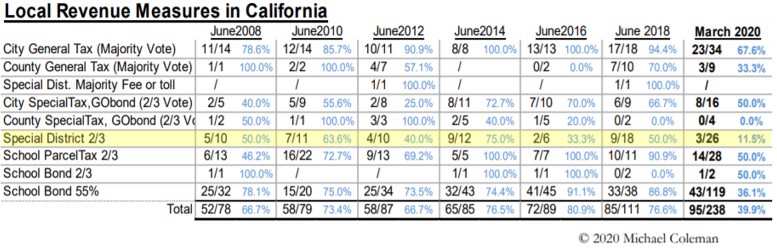
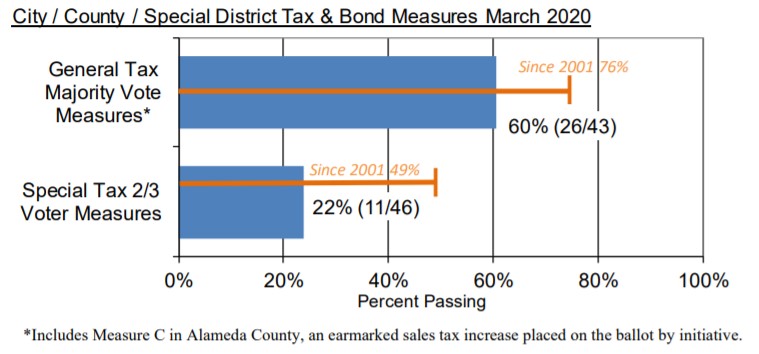
As Coleman writes, “[t]he passage rate of local non-school majority vote tax measures was also markedly lower in all categories compared to prior primary elections. Twenty-six of the 43 majority vote tax measures passed. Among the two-thirds vote city, county and special district special tax and bond measures, just 11 of 46 passed.”
Page 14 of Coleman’s report contains a listing of all the city, county and special district parcel tax measures that sought passage in March 2020. There were 27 non-school parcel taxes with 21 special district measures, of which six passed. In addition to those 21 special district measures, three special districts attempted to pass general obligation bonds, but all three failed to garner the necessary two-thirds vote. Similarly, two special districts attempted to pass transaction and use taxes, also failing to garner the necessary approval threshold.
Coleman’s report also contains a “post-mortem” analysis of the dismal results for special districts, beginning on page 18. The analysis attributes the low passage rates to various factors, including:
- An increasingly pessimistic electorate;
- Tax fatigue, cost-of-living, and accountability concerns;
- The coronavirus & its early economic impacts;
- An anticipated surge in Democratic voter turnout that failed to materialize
- Long lines at L.A. County voting centers
- New(ish) legal requirements for local measure ballot label language prescribed by AB-195; and
- A sharper drop-off in support for local finance measures among voters outside of the state’s largest urban centers
Michael Coleman’s report can be read in its entirely on the CaliforniaCityFinance.com webpage here.
#AdvocacyNews#FeatureNews