By: @Aaron Avery
CSDA and its coalition partners have continued to lead the way in preserving public agencies’ flexibility in using workplace technology, including Artificial Intelligence (AI), Automated Decision Systems (ADS), Workplace Surveillance technology, and other legacy and emerging technologies.
On May 14, the Assembly and Senate Appropriations Committees dispensed with their Suspense Files, determining which fiscally-impactful bills will advance to the floor, and which will be held on suspense (bills held on suspense are dead for the year).
CSDA members advocated against two of the measures to their representatives at Special Districts Legislative Days in April. Both measures were held on suspense and defeated for the year, showing the power of Districts Stronger Together:
CSDA and its coalition partners opposed these measures because they would have placed unreasonable restrictions on workplace technologies such as AI and Automated Decision Systems, and they failed to account for existing protections and unique aspects of the public sector workforce and public sector service delivery.
CSDA remains engaged on other workplace technology bills which continue to advance, including:
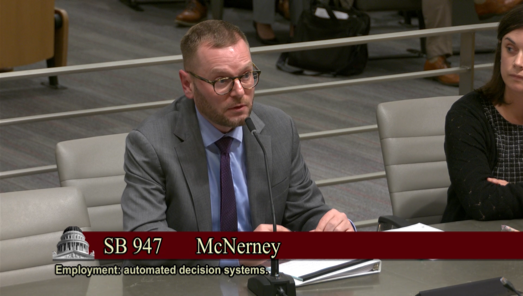
- SB 947 (McNerney) Employment: automated decision systems. This bill requires employers that primarily rely on an ADS to make a discipline, termination, or deactivation decision to provide a specified notice and to appoint a human reviewer to investigate and compile supporting evidence for the decision. This bill provides an employee with the right to request, and requires an employer to provide a copy of the most recent 12 months of the worker’s own data primarily used by an ADS to make a disciplinary, termination, or deactivation decision. A worker is limited to one request every 12 months for a copy of their own data used by an ADS to make a disciplinary, termination, or deactivation decision. This bill requires employers primarily relying on ADS to make a disciplinary, deactivation, or termination decision to provide a post-use notice, as specified. This measure will next be taken up for a vote on the Senate floor. (CSDA Position: OPPOSE; CSDA is the local government and schools coalition leader on this measure)
- SB 951 (Reyes) Employment: technological displacement: notice. Would provide that written notice is required in connection with the adoption of AI or automated technology that causes, in whole, layoffs or ceases employers’ hiring, as specified. This bill grants employees of employers with over 100 employees the opportunity to apply first in other positions of the company/organization if affected by technology displacement or termination, provided this does not conflict with a collective bargaining agreement. Employers who fail to provide notice within the allotted time frame are liable for employee back pay and the cost of any benefits. This measure will next be taken up for a vote on the Senate floor. (CSDA Position: OPPOSE UNLESS AMENDED)
- AB 1883 (Bryan) Workplace surveillance tools. Places restrictions on employers utilizing workplace surveillance technology. This measure will next be taken up for a vote on the Assembly floor. (CSDA Position: OPPOSE)
- AB 2656 (Petrie-Norris) Public employees: notice: artificial intelligence performing service within scope of work. Requires a public employer to provide a recognized employee organization no less than 45 days’ written notice before taking an action to develop, purchase, implement, or utilize any generative artificial intelligence to perform a service that is within the scope of work of the job classification represented by the recognized employee organization. This measure will next be taken up for a vote on the Assembly floor. (CSDA Position: OPPOSE)
May 29 is the deadline for bills to be voted out of their house of origin. Stay tuned to CSDA eNews and Advocacy News for more information.
#AdvocacyNews#FeatureNews#HR#HumanResourcesandPersonnel#Mandates