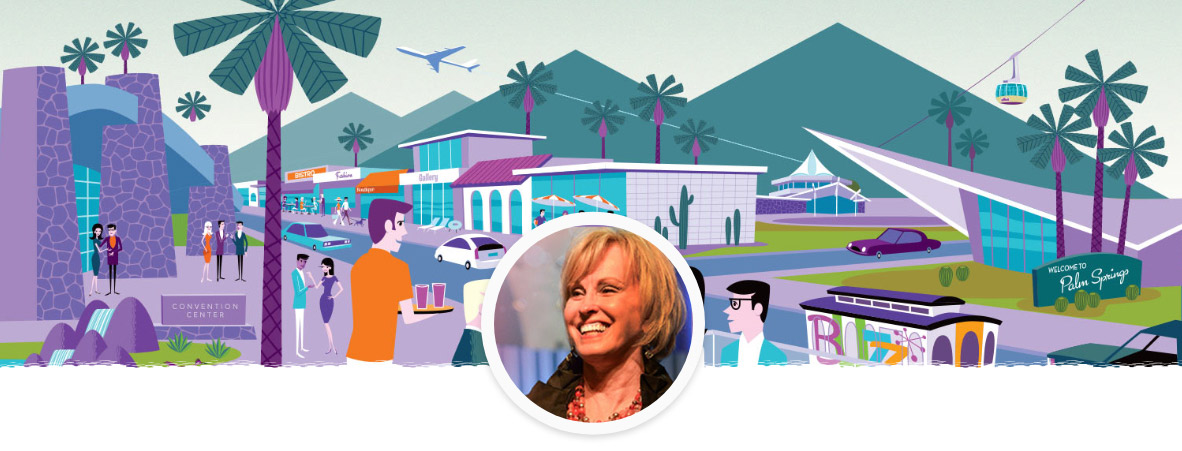
Keynote Speaker
California Special Districts sat down with Hall of Fame Keynote Speaker Connie Podesta, who is thrilled about speaking at
CSDA’s Annual Conference, and getting our audience excited about how cool psychology is! Most people totally underestimate how powerful psychology is when it comes to achieving bottom line results. Psychology = profits and productivity.
It is one of the most empowering things in the world! “People’s number one problem with their job is not their job; it is the people that they have to deal with on the job. It is people they don’t work well with, people they don’t understand, people who have attitudes and are difficult,” said Podesta. “That is where psychology comes in because if you have a better understanding of how to communicate, negotiate, collaborate and solve problems with people then your job is going to be so much easier. In other words, psychology helps solve the people puzzle!”
More than ever, Podesta has seen people turning down promotions because they have seen other people in leadership literally been driven crazy trying to deal with their employees, and it is not worth the money. “We want people excited about going into leadership, but they need to go in armed with content and understanding of human behavior,” said Podesta. “Otherwise, you go into a very stressful situation without the tools needed to be successful.” The average leader never had a leadership or management course, let alone a psychology course, in their entire life. Bottom line, leaders do not have to teach self-motivated people; they just need to get out of their way, not micromanage, and let them do their job. The determination of a good leader is how you lead your worst employees. “You are not going to be recognized for what you do with your top employers; you could leave your building for a month and they would not know you are gone,” Podesta said. One of the reasons why people are put into leadership positions is because not everyone can be counted on to do their job; therefore, the purpose of leadership is to get those marginal employees up to speed.
Connie Podesta shared some of her life experiences that lead her on the journey of becoming an expert in human behavior and leadership development. “Growing up, I kept getting kicked out of class for talking too much and for always joking around,” Podesta shared, “this is very ironic since now my livelihood is being a comedian and a professional speaker. I love to share with audiences that sometimes what people see as our weaknesses, we can turn around to be some of our best strengths.” Twenty five years ago, Podesta began by teaching speech and communication, which lead to her present job as an international keynote, author and coach. She soon discovered that people everywhere had to deal with difficult people and situations that they really did not know how to deal with. She realized early on that if she was going to help people grow in their businesses, then she needed to understand the psychology of human behavior; she had to dig deeper. Podesta shared, “Sometimes people tell me their concerns, but I know that is just level one; there are much deeper things going on.” This lead Podesta to get a graduate degree in counseling and human relations so when she was helping people change, she had that background.
Podesta is presenting on “StandOut Leadership…Lead Like You Mean it!” at CSDA’s Annual Conference. She expounds on this and what attendees will walk away with by first explaining that most individuals stumble onto their first leadership job. They have a job, they are doing well in that job, other people notice and they get their first promotion. Now they are not only responsible for their new job, but other people doing their jobs as well. “These are two different sides of the brain,” Podesta said, “focusing on our own duties and tasks is very different from the ability to lead, motivate, educate, train and inspire other people to do their job.” Unfortunately, not everyone in leadership is required to take a psychology class, which would help them immensely because leadership is all about psychology! Podesta shares, “Psychology is basically an understanding of why people do what they do, say what they say, react the way they react. Psychology is an understanding of what motivates people, what energizes people, what causes people to want to reach their own potential or get in their own and sabotage themselves. Are these not all things leaders are responsible for doing for employees?”
Opening Keynote Presentation
Connie Podesta
Stand Out Leadership…Lead Like You Mean it!
In a perfect world all employees would be: high achieving, self-motivated, engaging, team players who see the big picture and always strive to do their best to get the job done on time without complaining. Does that sound like the Twilight Zone? Bottom Line: In the real world many employees simply “meet expectations,” lack initiative, bring their personal life to work, stress over every change and whine about having to WORK….on the job! “Enough!” says Human Behavior and Leadership Development expert Connie Podesta, who has empowered thousands of leaders worldwide with the attitudes, mindsets and strategies necessary to create a team that’s willing, able and excited to get the job done THE RIGHT WAY! With her signature blend of comedy and “tell-it-like-it-is” delivery, Connie takes you inside the minds of even your most difficult employees so you can turn negative attitudes into positive, entitlement into accountability, complacency into productivity, complaining into solutions and “that’s not my job” into ownership.
Tuesday, September 25
9:00 – 10:45 a.m.
Audiences love Podesta’s leadership sessions because she takes them into the minds of people reporting to them. Generally, we are stuck in our own minds. We know what we want, have our own perception and those generate our leadership style. Maybe half will identify with that leadership style, but probably half will not. To be successful, you must relate to each individual. It is like parenting; anyone who has kids knows that they are totally different though they grew up in the same house and environment with the same rules. You must approach each child differently and what discipline will work for them. The same applies to leadership and management. “Great leaders know how to relate to employees, know what works what doesn’t, what will motivate them and what won’t. They are willing to approach them in a way that makes them grow and produces the most,” said Podesta. “Once you get in your employees’ mind and understand that then it is a game changer!” Though rules and policies of organizations must be the same, the way we deliver the message, motivate, teach, have conversations must be based on the way they will response - if we want the most of them.
“Most of us lead the way we want to be lead and manage other people the way we want to be managed,” said Podesta. If we want people to manage by being hands off… just let me do my own thing; I don’t need any reminders from you; I don’t need any awards then that is how we tend to manage other people with the same hands-off approach. If we love our manager to be involved with us, talk and communicate often with us; we like a lot of reassurance and thumbs up when we do a good job then we tend to be very engaged managers. The problem is that that does not work for all our employees; we cannot manage people the same. That is what Podesta teaches audiences, “the way you would like to be managed is not necessarily the same approach that will work with every one of your employees.” By the time her session is done, our conference attendees will have a better understanding of their own managing style; how to identify other people’s personality so that they can better lead them, coach them, train them, mentor them, have crucial conversations with them, and negotiate with them differently that they normally would. Attendees are going to be excited because they will leave with understanding how to identify each of their employees’ personalities, what they need, what they want, and what style of leadership will motivate that individual employee to reach their potential, to do their job better, and be more effective. “That is a skill that most people in management have never been exposed to,” said Podesta.
Podesta has empowered thousands of leaders worldwide with the attitudes, mindsets and strategies necessary to create a team that’s willing, able and excited to get the job done the right way. Her number one tip for success in this: “Stop being a boss and be a leader! There is a huge different between these two things. People who report to you are going to make up their minds very quickly if they WANT to follow your lead or that they feel like they HAVE to follow your lead - then they generally don’t choose to follow your lead.” When people are bossed around and not collaborated with, they do what you say not because they want to but because they are afraid of losing their job or getting demoted - it is fear driven. If we want a successful team, not just doing what we say because they have to we need to be a leader. Leaders create a team of people who want to follow your lead because they respect, trust and believe in you. The amount of work you will getting from these employees is immensely higher that those employees who do the minimal job they have to, the that’s not my job attitude.
Podesta continued to share the differences between bosses and leaders, “Bosses are tasked focused and leaders are people focused.” Bosses tell people what needs to be done without giving the big picture. Leaders collaborate; they bring the team in on the big picture, what must happen and listens to the team’s ideas. Leaders make it about the people, their team doing the job rather than just the tasks that needs to be done. “Bosses have workers and leaders have teams. If you are being a boss you have people who do the work for you. If you are a leader, you work together with your team – it is a team effort,” said Podesta. “A team win is a win for everyone. Bosses order people around; leaders support people.” Bosses say what can you do for me. Leaders say what can I do for you. Leaders remove obstacles for their teams; they ask how can I help you to do your job in the best way possible -more staff, more training? Bosses focus on things that go wrong and tend to blame others. Leaders have respectful discussions to talk through what happened and focus on changes that can help it not happen again. Leaders focus on failure as an opportunity to grow and learn; bosses just get angry. Bosses tend to take credit for what you do. Leaders share the credit and give recognitions to the team.
Podesta wants her audiences to know is that how they choose to lead is going to impact productivity by huge amounts. People either believe they HAVE to follow you or they WANT to follow you. Those who HAVE to follow a leader do the minimum; those who WANT to follow a leader will exceed expectation. This is a big difference!
The good news is that Podesta’s leadership sessions don’t just apply to work; she also gives examples of home life. Every leadership skill taught will help attendees deal with relationships inside and outside of work. Finally, Podesta wants our conference attendees to know that she is not the typical conference speaker; she is a comedian and uses comedy and humor as a vehicle to tackle top issues. “When you learn about people, you laugh a lot because you recognize these human behaviors in yourself, your friends, family or colleagues,” said Podesta. Even though there is a ton of content, this session will be a laugh out loud session. See you Tuesday, September 25, at 9:00 a.m. in Indian Wells!
Register Now